Rent the Car, Skip the Resort: Driving Colombia's Caribbean Coast From Cartagena to Tayrona
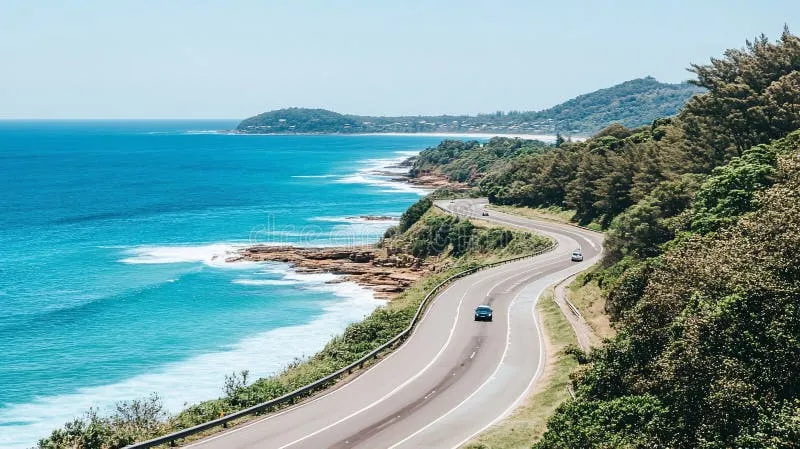
Photo: coastal highway caribbean Colombia ocean road trip, via thumbs.dreamstime.com
There's a version of a Caribbean vacation that every American knows by heart: book a flight, land at a resort, and spend a week rotating between the pool and the buffet. Then there's the version almost nobody talks about — the one where you rent a car in Cartagena, point it toward the mountains, and spend five days watching Colombia's Caribbean coast unfold one beach town at a time.
The drive from Cartagena to Tayrona National Park covers roughly 230 kilometers, and it might be the most underrated road trip in the Western Hemisphere. Here's how to do it right.
Why Drive When There Are Buses?
Fair question. Colombia's coastal bus system is cheap and reliable, and plenty of travelers get by just fine without wheels. But buses run on bus schedules, not yours. Having a car means you can pull over when a roadside stand is grilling arepas, detour to a swimming hole you spotted on a map, or linger an extra afternoon in Minca because the mountain air feels too good to leave.
Rental agencies operate out of Cartagena's airport and the old city, and rates routinely land between $30 and $50 a day — less than a single dinner back home. If the idea of driving in a foreign country makes your palms sweat, hire a driver instead. It's surprisingly affordable, often $80 to $120 per day, and your driver doubles as a translator, mechanic, and unofficial tour guide.
Stop One: Barranquilla, Briefly
About two hours up the coast, Barranquilla is less a destination than a checkpoint — but give it a lunch stop anyway. This is Shakira's hometown and the home of Colombia's most famous carnival, and even on a random Tuesday, the city has a scrappy energy. Grab fish soup and patacones, fill the gas tank, and get moving.
Stop Two: Minca, Where the Coast Turns Green
Roughly 30 minutes past Santa Marta, the highway delivers you to the base of the Sierra Nevada mountains, and this is where the itinerary splits. Minca sits an hour up a winding road into the hills — coffee farms, waterfalls, and temperatures a good ten degrees cooler than the coast.
Spend a night here if your schedule allows. The birdwatching alone justifies it; the Sierra Nevada is one of the most biodiverse mountain ranges on Earth, and toucans are genuinely a morning-coffee-with-your-coffee situation.
Stop Three: Palomino, the Laid-Back Middle Child
Back on the coastal highway heading north, Palomino is the beach town for people who find Cabo San Juan too busy and all-inclusives too sterile. It's a long strip of guesthouses and hammock hostels between the highway and the ocean, where the main activities are tubing down the river, walking to the beach, and doing absolutely nothing with great commitment.
Book at least one night. Sunrise over the Caribbean with the snowcapped Sierra Nevada in the background is a view you'll be chasing for the rest of your life.
The Finish Line: Tayrona and Playa Cristal
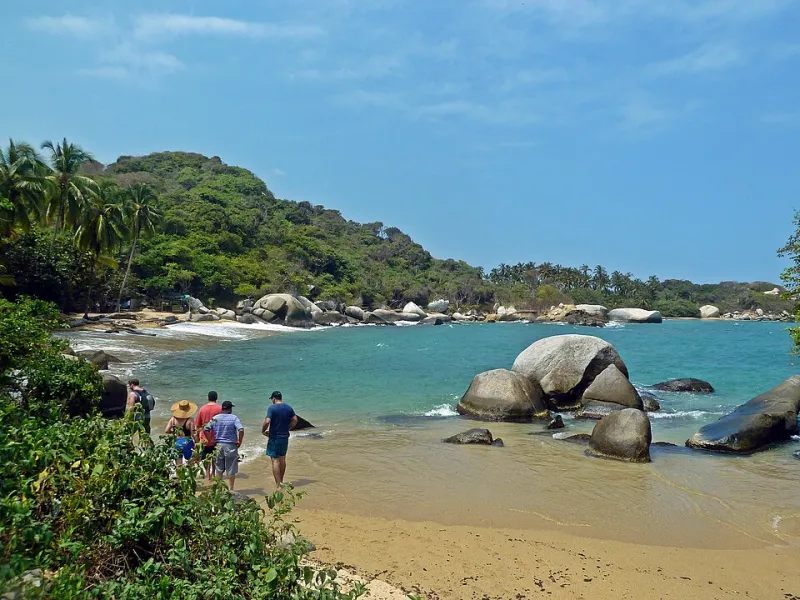
The final leg brings you into Tayrona territory. Park entrance regulations change seasonally — the park sometimes closes for Indigenous rest periods, so check dates before you lock in your itinerary. Once inside, the hike to Cabo San Juan is the classic: jungle trail, monkey sightings, and a beach that genuinely looks Photoshopped in person.
If you want something quieter, Playa Cristal on the park's northern edge is a snorkeler's dream, reachable by boat from Taganga or by arranging transport through your accommodation.
The Safety Talk You Actually Need
Let's address the question your mother is going to ask. Driving in coastal Colombia is not the white-knuckle experience the internet sometimes suggests, but it has its own rhythm:
- Drive during daylight. Roads are unlit, motorcycles often lack lights, and livestock doesn't use crosswalks.
- Expect military checkpoints. They're routine, friendly, and quick. Have your passport and rental documents handy.
- Watch for topes. Speed bumps appear without warning, often in front of schools and small towns.
- Don't drive at night, period. This isn't paranoia; it's just good sense on two-lane highways.
- Use Waze. It's practically the national navigation app of Colombia, and locals update road conditions in real time.
What It Costs
Here's the math that makes this trip a no-brainer for American travelers. Five days with a rental car, guesthouses, meals, park fees, and gas typically lands between $600 and $900 per person — depending on your splurge tolerance. A comparable week at a Caribbean all-inclusive, before flights, regularly clears $2,500.
But the real value isn't the savings. It's that this route hands you five completely different vacations in one trip: a colonial city, a cloud forest, a hammock beach, a jungle park, and a hundred roadside conversations in between. No resort pool can compete with that.