Skip the Selfie Crowd: Tayrona's Secret Waterfalls Are Worth the Muddy Boots
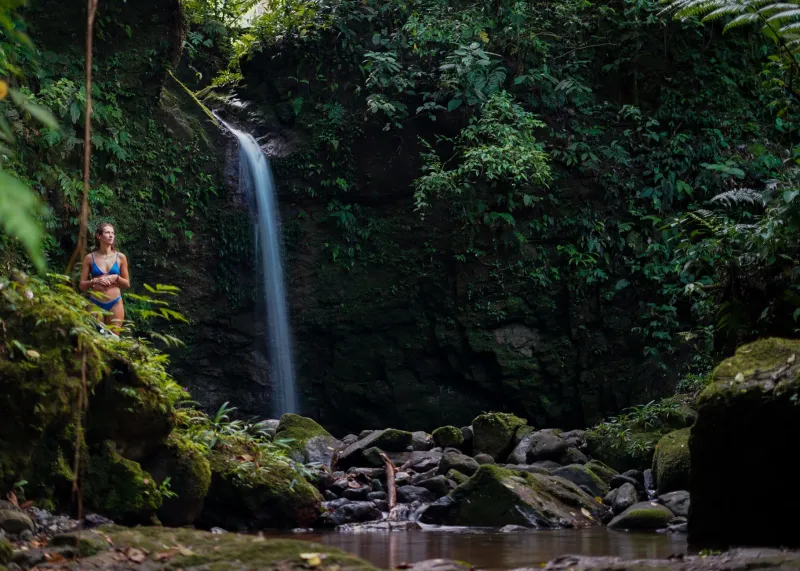
Let's be honest. You've scrolled past the same photo a hundred times — turquoise water cascading over mossy rocks, framed by jungle so green it almost looks fake. That's Marmorata, and yeah, it's gorgeous. It's also packed with people who had the exact same idea as you, all trying to recreate the same shot between 10 a.m. and 2 p.m. on any given Saturday.
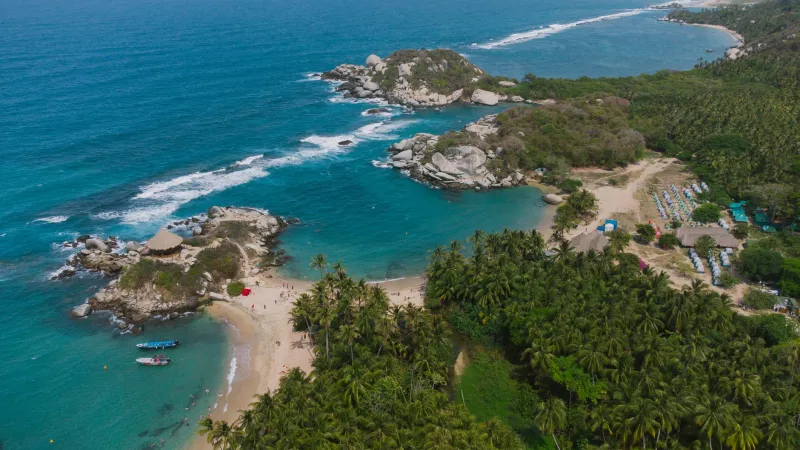
Tayrona National Park stretches across roughly 57,000 hectares of Colombian coastal jungle, and the waterfalls most visitors see represent maybe five percent of what's actually out there. The rest? Dense, dripping, quietly spectacular — and almost entirely yours if you're willing to trade a manicured trail for one that requires actual navigation.
This isn't about gatekeeping. It's about giving you a genuinely different experience in one of South America's most extraordinary landscapes.
Why Tayrona's Waterfall Scene Goes Way Deeper Than the Highlights
The Sierra Nevada de Santa Marta — the mountain range that forms Tayrona's dramatic backdrop — receives intense rainfall that funnels through dozens of unnamed streams and creeks before spilling toward the Caribbean. Many of these create cascades that simply don't appear on any tourist map. They exist in the ecological literature, in the knowledge of Kogi indigenous guides, and in the memories of the very few travelers who've stumbled onto them.
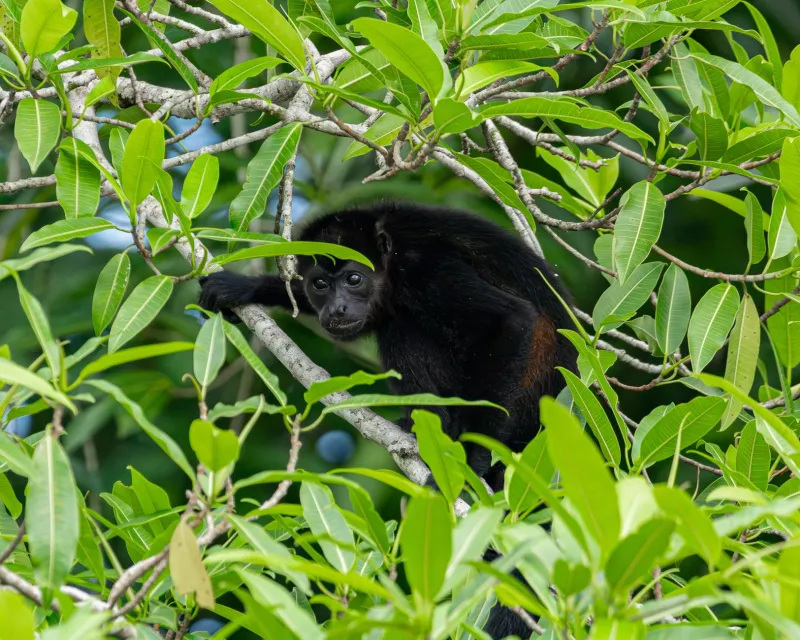
The park's trail system officially covers the coastal zone, but the terrain rises sharply inland, and that's where the real waterfall density lives. The higher you climb, the cooler the air gets, the louder the howler monkeys become, and the less likely you are to see another North American carrying a Nalgene bottle.
The Cascades Worth Hunting Down
Pozo del Diablo (Devil's Pool)
Difficulty: Moderate-Hard Approximate GPS: 11.3021° N, 73.9847° W Best time to visit: Early morning, weekdays, dry season (December–April)
The name sounds intimidating, but the hike to Pozo del Diablo is more about persistence than danger. You'll branch off the main Arrecifes trail about 40 minutes past Cañaveral and follow a secondary path that most visitors miss entirely — it's marked by a faded orange blaze on a cecropia tree, not an official sign. The cascade itself drops about 15 feet into a pool deep enough for swimming, ringed by ferns and bromeliads. Water temperature hovers around 72°F even in peak summer, which feels incredible after a sweaty jungle approach.
Insider tip: Go before 8 a.m. You'll almost certainly have it to yourself, and the light filtering through the canopy at that hour is something a camera can't fully capture.
La Cascada de los Monos (The Monkey Falls)
Difficulty: Easy-Moderate Approximate GPS: 11.3198° N, 74.0112° W Best time to visit: Late afternoon, any season
This one earned its nickname honestly. The resident troop of white-faced capuchins treats the surrounding trees like a playground, and watching them navigate the canopy overhead while you soak in the pool below is the kind of moment that makes you feel like you're in a nature documentary rather than a tourist attraction. The trail junction is about 20 minutes from the park's Zaino entrance — look for a narrow path heading uphill just past the second creek crossing.
The waterfall itself is more of a series of smaller drops than a single dramatic plunge, but the cumulative effect — tiered pools stepping down through the forest — is genuinely beautiful. Bring water shoes. The rocks are slippery in the best possible way.
The Unnamed Falls Near Cabo San Juan
Difficulty: Hard Approximate GPS: 11.3387° N, 73.9654° W Best time to visit: Morning, dry season only
This one requires a guide. Full stop. The trail that leads here isn't maintained, the terrain includes some scrambling over exposed roots and boulders, and getting turned around in this section of jungle is a real possibility. That said, the payoff is extraordinary: a 30-foot freefall into a wide, clear pool that feels genuinely remote even though it's technically within park boundaries.
Several community-based operators in the town of El Zaino offer guided hikes to this area. Expect to pay $40–$60 USD for a half-day excursion. It's worth every penny.
Practical Stuff You Actually Need to Know
Crowd avoidance strategy: The single most effective tactic is timing. Tayrona's popular spots peak between 10 a.m. and 3 p.m., Tuesday through Sunday. Arrive at the park gate when it opens (7 a.m.) and you'll have a two-hour head start on the day-trippers from Santa Marta.
What to carry: A two-liter water capacity minimum, water purification tablets (the streams look clean, but don't assume), a basic first aid kit, and a downloaded offline map from Maps.me or Gaia GPS. Cell coverage inside the park is unreliable at best.
Footwear: Waterproof trail runners or lightweight hiking boots with decent grip. Sandals are fine for the beach. They're miserable on muddy jungle trails.
Permits and rules: Tayrona requires advance online reservation through Colombia's national parks system (parquesnacionales.gov.co). Daily visitor numbers are capped, which is actually a good thing — it keeps the park from getting completely overrun. Book at least a week ahead if you're visiting during US holiday windows.
Respect the ecosystem: This should go without saying, but don't move rocks in streambeds, don't bring single-use plastics into the park, and definitely don't try to touch or feed any wildlife you encounter. The park's biodiversity is the whole reason these places feel magical.
The Real Reason to Go Off-Script
There's a particular feeling that comes from standing in a jungle pool that doesn't have a name on any tourist map, listening to water fall, watching a blue morpho butterfly work its way across a shaft of light. It's not something you can photograph your way into. You have to actually be there, slightly tired from the hike, maybe a little muddy, entirely present.
Tayrona's famous spots are famous for good reason. But the park is big enough, wild enough, and generous enough to offer experiences that belong entirely to you — if you're willing to look past the postcard.