7 Wild Animals You Can Actually Spot on Colombia's Caribbean Coast (No Safari Jeep Required)
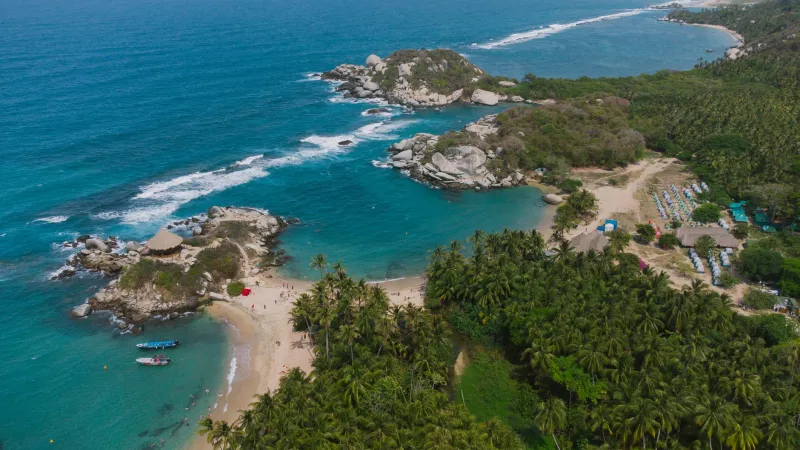
Forget the brochure promises of guaranteed jaguar sightings and dolphin escorts. Real wildlife watching is about patience, timing, and knowing where to look — and Colombia's Caribbean coast genuinely rewards that kind of attention. Tayrona National Park and the surrounding coastal zone sit at the meeting point of three distinct ecosystems: tropical dry forest, humid jungle, and coral reef. That ecological overlap creates conditions for extraordinary biodiversity, and for the traveler who pays attention, remarkable encounters are entirely possible.
Here's the honest breakdown — what you're likely to see, when, and how to do it without being that person who accidentally ruins someone else's wildlife moment.
1. Howler Monkeys (Alouatta seniculus)
Where: Throughout Tayrona's forest interior, particularly near Cañaveral and Arrecifes Best season: Year-round, most vocal at dawn and dusk Realistic expectation: Very high — these are among the easiest mammals to encounter
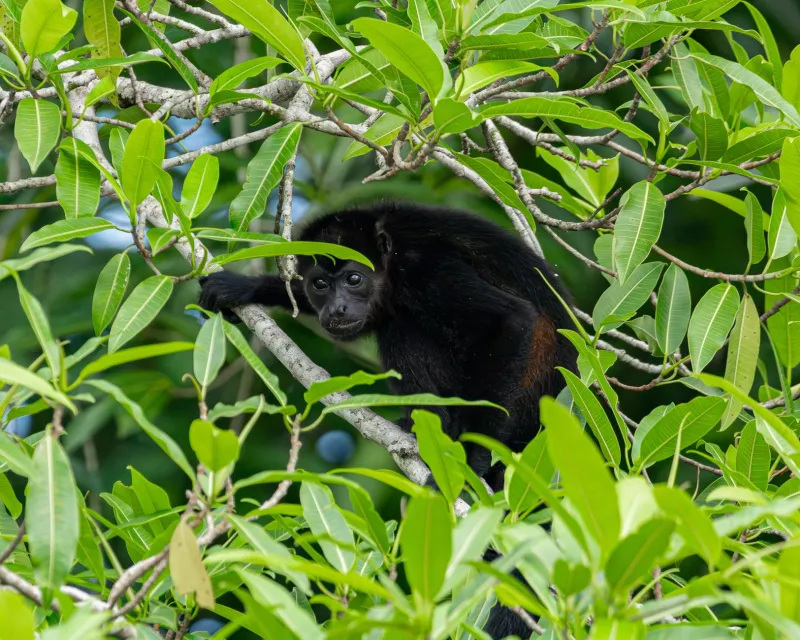
You'll probably hear howler monkeys before you see them. Their territorial calls — a deep, resonating roar that sounds genuinely prehistoric — carry for miles through the jungle canopy. Once you've located the sound, scan the upper branches of large fig and cecropia trees. Howlers tend to move slowly and rest for long periods, which makes them easier to observe than most primates.
They're large (up to 22 pounds), rust-colored, and generally unbothered by human presence as long as you don't crowd them. Maintain at least 15 feet of distance and resist the urge to make eye contact for extended periods — primates read prolonged staring as a threat display.
Photography tip: Use a telephoto lens (200mm minimum) and shoot in burst mode. Howlers move unpredictably when they do move, and having multiple frames to choose from dramatically improves your odds of a sharp shot.
2. White-Faced Capuchin Monkeys (Cebus capucinus)
Where: Mid-canopy throughout Tayrona, especially near freshwater sources Best season: Year-round Realistic expectation: High, particularly on established trails
If howlers are the brooding philosophers of Tayrona's primate community, capuchins are the chaotic younger siblings. They're fast, curious, and remarkably clever — watch them use sticks and rocks as tools to access food, and you'll understand why they've been subjects of behavioral research for decades.
Capuchins travel in troops of 10–30 individuals and cover significant ground daily. Your best chance of an encounter is to find a fruit-bearing tree and wait. They'll come to you.
Ethics note: Never feed capuchins. It's not just bad for them metabolically — it habituates them to human contact in ways that create long-term behavioral problems and can lead to park authorities removing or euthanizing animals that become aggressive. The cute monkey reaching for your granola bar is not worth it.
3. Caribbean Sea Turtles (Multiple Species)
Where: Beaches along the Tayrona coastline, particularly Playa Brava and areas east of Cabo San Juan Best season: March–October for nesting; hatchlings typically emerge June–November Realistic expectation: Moderate, with some research and patience
Four sea turtle species use Colombian Caribbean beaches — loggerhead, leatherback, hawksbill, and green. Tayrona's more remote beaches, particularly those accessible only by trail, see regular nesting activity during peak months.
If witnessing a nesting event is on your list, connect with Fundación Tortugas del Mar or similar conservation groups operating in the region. They run responsible night observation programs that put you in the presence of nesting females without disrupting the process. Going rogue and wandering beaches with flashlights at night is both illegal within the park and genuinely harmful to nesting success.
Photography tip: No flash. Ever. Artificial light during nesting and hatching events disorients turtles and causes hatchlings to move away from the water rather than toward it. Use your eyes and let the moonlight do the work.
4. Jaguars (Panthera onca)
Where: Deep forest zones, rarely near established trails Best season: No reliable season — encounters are genuinely rare Realistic expectation: Low to very low, but not impossible
Let's be straight with you: seeing a jaguar in Tayrona is not something you can plan for. It's something that happens to very few people, usually park rangers and researchers, and almost never to day visitors on the main trails.
That said, jaguars are confirmed residents of the Sierra Nevada de Santa Marta, and camera trap studies have documented their presence in Tayrona's buffer zones. If you're spending multiple nights in the park and hiking in low-traffic areas at dawn, your odds improve — marginally.
What you might realistically see: jaguar tracks in mud near freshwater sources, scratch marks on large tree trunks, and scat. For many wildlife watchers, evidence of a jaguar's presence is genuinely thrilling, even without the animal itself.
5. Magnificent Frigatebirds (Fregata magnificens)
Where: Coastal areas, particularly around Taganga Bay and Tayrona's western beaches Best season: Year-round Realistic expectation: Very high — these birds are hard to miss
With a wingspan approaching eight feet and a flight style that makes effortless look like an understatement, frigatebirds are a regular presence along Tayrona's coastline. Males sport an inflatable red throat pouch used during breeding displays; females and juveniles have white chests that make them easy to distinguish.
Watch for them riding thermals over the headlands between beaches, or harassing boobies and terns into dropping their catch — frigatebirds are accomplished aerial pirates and watching a mid-air food theft unfold in real time is genuinely spectacular.
6. Blue-Footed Boobies (Sula nebouxii)
Where: Rocky outcroppings and offshore islets visible from Tayrona's beaches Best season: November–May Realistic expectation: Moderate, from the shore with binoculars
Yes, their feet are actually that blue. The pigmentation comes from carotenoid pigments in their diet, and brighter feet signal better health and nutritional status — which is why females pay close attention to foot color when selecting mates.
You're unlikely to get close to boobies on foot in Tayrona, but a decent pair of binoculars pointed at the rocky islets offshore will often reveal resting or diving individuals. Their plunge-diving behavior — folding wings back and dropping like a dart from 80 feet up — is one of the more dramatic fishing techniques in the bird world.
7. Poison Dart Frogs (Oophaga spp.)
Where: Humid forest floor, near leaf litter and bromeliads Best season: Wet season (May–November) when activity peaks Realistic expectation: Moderate with careful searching
They're tiny — most species max out around an inch — but their warning coloration makes them surprisingly findable once you know what you're looking for. Colombia hosts more dendrobatid species than almost anywhere on earth, and Tayrona's forest floor harbors several.
Slow down. Look low. Check the undersides of large leaves and the bases of bromeliads where water collects. You're not going to stumble across these frogs at normal hiking pace — they reward the kind of attention that most visitors don't have the patience for.
Ethics note: Do not touch. Their skin toxins are real, and handling stresses the animals significantly. Photograph from a few inches away with a macro lens and leave them exactly where you found them.
Making the Most of Your Wildlife Time
The single best investment you can make for wildlife watching in Tayrona is hiring a local naturalist guide for at least one full day. The difference between what you'll spot alone versus with someone who's spent years learning this ecosystem is not subtle. Community-based operators in El Zaino and Calabazo offer guided experiences that directly support local families — ask your accommodation for recommendations, or check with the park's visitor center at Zaino.
Bring binoculars. Wear muted colors. Move slowly. And remember that the best wildlife encounters are the ones the animals chose to give you.