The People Rebuilding Tayrona: Inside the Quiet Conservation Fight for Colombia's Wild Coast
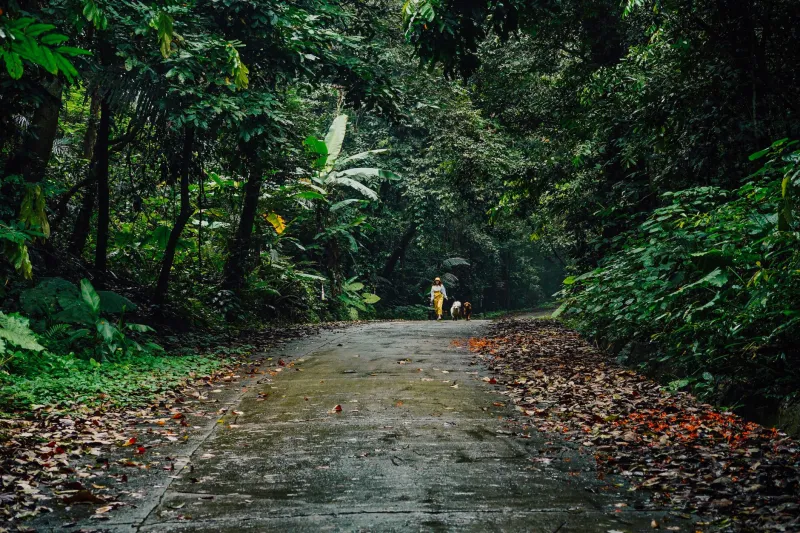
The jungle around Tayrona looks dense and ancient from the trail. It's easy to assume it's always looked this way — that the towering trees and the howler monkeys and the rivers cutting through the Sierra Nevada are simply what this place is, unchanged and self-sustaining.
The reality is more complicated, and more hopeful, than that picture suggests.
Much of the vegetation visitors walk through today is secondary growth — forest that was cleared for agriculture or cattle ranching decades ago and has been recovering since the park was established in 1964. Some of that recovery is natural. But an increasing portion of it is being actively managed, coaxed, and accelerated by a loose network of scientists, Indigenous community members, and conservation organizations who are doing painstaking work largely outside the view of the tourists who benefit from it.
This is their story.
Reforestation in the Sierra: Slower Than It Looks
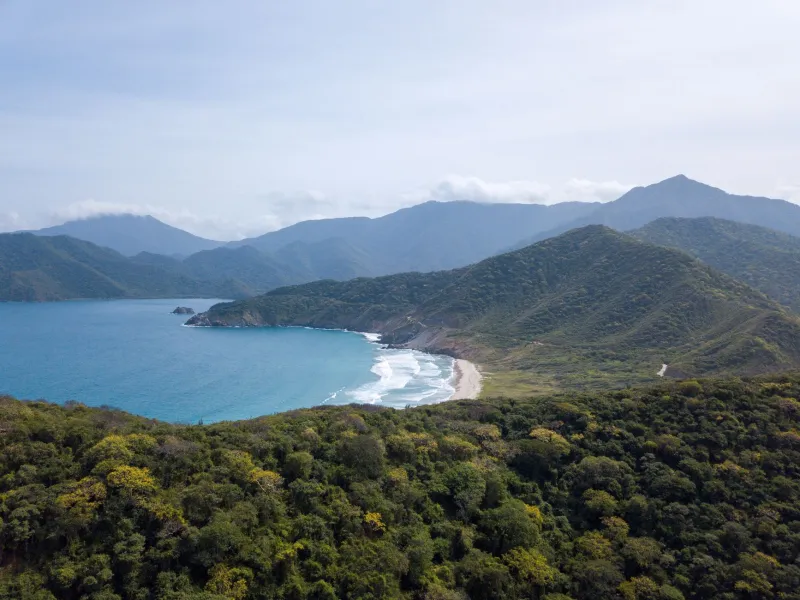
The Sierra Nevada de Santa Marta is the world's highest coastal mountain range, and its ecological complexity is extraordinary — cloud forest, dry tropical forest, mangrove, and coral reef all exist within a relatively compact area. That complexity is also what makes restoration challenging. You can't just plant trees and walk away.
Several organizations working in the broader Sierra Nevada watershed have moved toward what ecologists call "assisted natural regeneration" — a method that involves removing invasive species and livestock pressure, then allowing native species to re-establish themselves with targeted support rather than wholesale replanting. It's slower than a tree-planting campaign, and it doesn't photograph as well, but it produces forest communities that are structurally closer to what existed before disturbance.
One project operating in the buffer zone around Tayrona has been working with local landowners to transition cattle pasture back toward native vegetation, using payment-for-ecosystem-services agreements that give farmers a financial reason to participate. The results, researchers say, are promising — native bird species have returned to areas that were degraded grassland as recently as ten years ago.
The Coral Problem Nobody's Talking About Loudly Enough
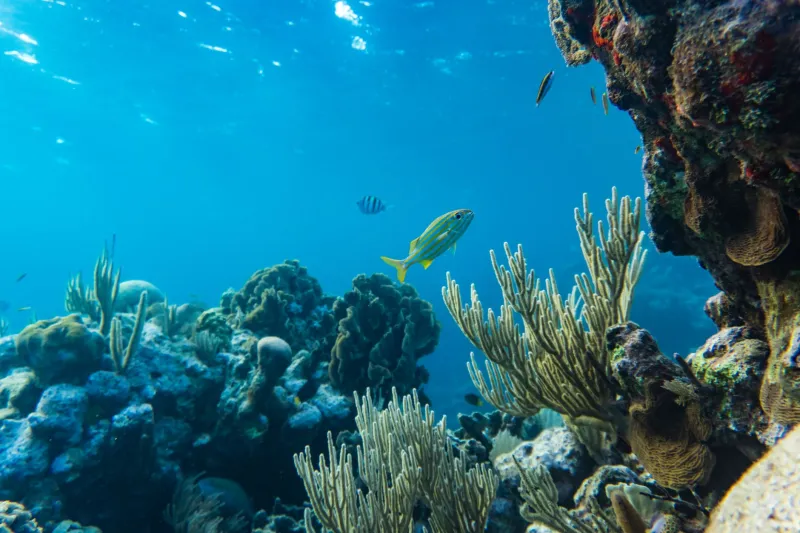
Offshore from Tayrona, coral reef systems that once extended along significant stretches of the coast are in various states of stress. Thermal bleaching from warming ocean temperatures is the headline threat, but it's compounded by sedimentation from coastal development, runoff from agricultural areas inland, and — more directly — boat anchoring and diver contact in popular snorkeling areas.
A small team of marine researchers based in Santa Marta has been conducting annual reef health surveys around the park for years, building a dataset that documents both the decline and, in some areas, the recovery. Their findings are nuanced: some reef sections that were heavily bleached in previous warm-water events have shown meaningful recovery where physical disturbance has been reduced. Others have not.
"The reefs aren't gone," one researcher involved in the surveys explained. "But they're not the same reefs that were here thirty years ago. What we're trying to understand is what conditions give them the best chance of adapting."
Part of the answer, the team believes, involves stricter management of recreational access to the most sensitive reef areas — something that's been difficult to enforce given the park's limited ranger capacity.
Indigenous-Led Conservation: The Model That Predates the Park
Long before Tayrona was designated a national park, the Indigenous communities of the Sierra Nevada — the Kogi, Arhuaco, Wiwa, and Kakuamo — were managing the landscape according to principles that modern conservation science is only recently catching up to.
The Kogi concept of aluna — a kind of spiritual attention to the health of natural systems — has practical ecological dimensions that researchers have begun to take seriously. Kogi sacred sites (nuhuales) often correspond to ecologically sensitive zones: water sources, ridge lines, transitional forest edges. Protecting those sites for spiritual reasons has the effect of protecting them ecologically as well.
Some conservation organizations working in the Sierra have moved toward formal partnerships with Indigenous communities, recognizing that the communities' territorial knowledge and governance structures are conservation assets in themselves. These partnerships aren't always easy — they require genuine consultation and a willingness to let Indigenous priorities shape project design — but where they've worked, the results have been more durable than externally imposed conservation models.
For visitors, engaging with Indigenous-led tourism initiatives is one of the most direct ways to support this work. When Indigenous guides are hired, when community-run experiences are chosen over general tour operators, the economic signal supports communities that are actively maintaining the ecosystems Tayrona visitors come to see.
Mangroves: The Underappreciated Front Line
Along the coastline near the park's boundaries, mangrove systems that once formed a continuous buffer between land and sea have been fragmented by decades of development pressure. Mangroves are unglamorous compared to coral reefs or cloud forest, but their ecological function is critical — they filter runoff, provide nursery habitat for fish species that feed the reef, and protect coastlines from erosion and storm surge.
A community-based mangrove restoration project operating near one of the coastal communities adjacent to the park has been replanting degraded mangrove areas using locally collected propagules — the seedlings that mangroves naturally produce. Community members, including young people from local fishing families, have been trained as restoration technicians. The project is small in scale but has been operating consistently for several years, which in conservation terms is more valuable than a large one-time planting event.
The fishing families involved have an obvious stake in the outcome: healthier mangroves mean healthier fish populations, which means more sustainable livelihoods. Conservation and economic interest, in this case, are pointing in the same direction.
How Visitors Can Actually Help
The gap between "ecotourism" as a marketing term and ecotourism as a genuine contribution to conservation is wide, but it's not impossible to cross. A few things that actually make a difference:
Hire local, not large. When you need a guide, a boat, or a place to stay, look for options that are directly community-owned rather than operated by companies based in Bogotá or internationally. The economic benefit distribution matters.
Follow the rules — all of them. Daily visitor limits, trail restrictions, and no-anchor zones exist for documented ecological reasons. Enforcement is inconsistent, which means visitor compliance is the only reliable mechanism.
Ask about conservation projects. Several organizations working in and around Tayrona welcome volunteer days or simply interested visitors. Showing up and asking questions — at a reforestation project, at a community meeting about park management — signals that this work has an audience beyond grant committees.
Spend time in the buffer zone. The communities and landscapes immediately outside the park's official boundaries are ecologically connected to the park and economically dependent on its health. Tourism spending that reaches those areas supports people who have a direct interest in keeping the ecosystem intact.
Tayrona is worth protecting. The people doing that work — with limited budgets, complicated politics, and the constant pressure of rising visitor numbers — deserve to know that the travelers passing through understand what's actually at stake. Go see it. Then go home and tell people what you saw.