Loving Tayrona to Death: The Uncomfortable Question Every Visitor Has to Answer
Let's start with something most travel guides won't tell you: the moment you buy your entry ticket to Tayrona National Park, you've already complicated things. Not because you're a bad person, not because you skipped the reusable water bottle, but because the very act of showing up — passport in hand, hiking boots laced, heart full of good intentions — is, on some level, at odds with the place you came to protect.
That's the Tayrona paradox. And it doesn't resolve neatly.
The Park That Shouldn't Work as a Destination
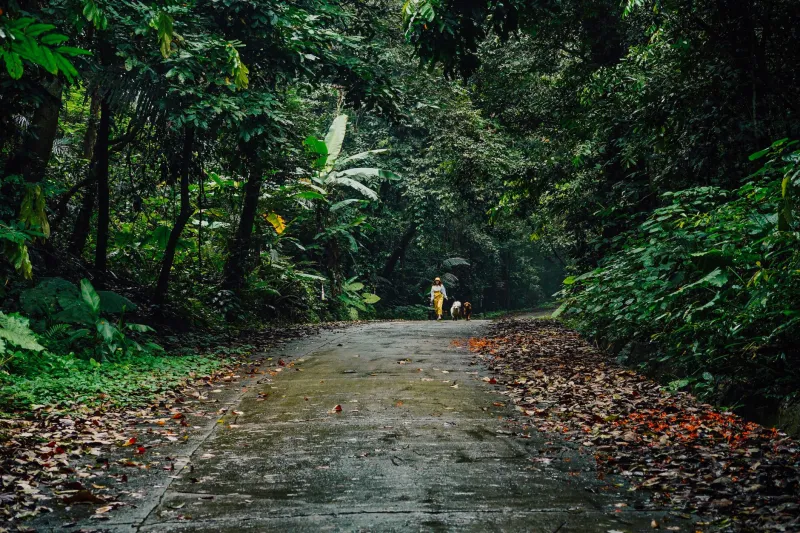
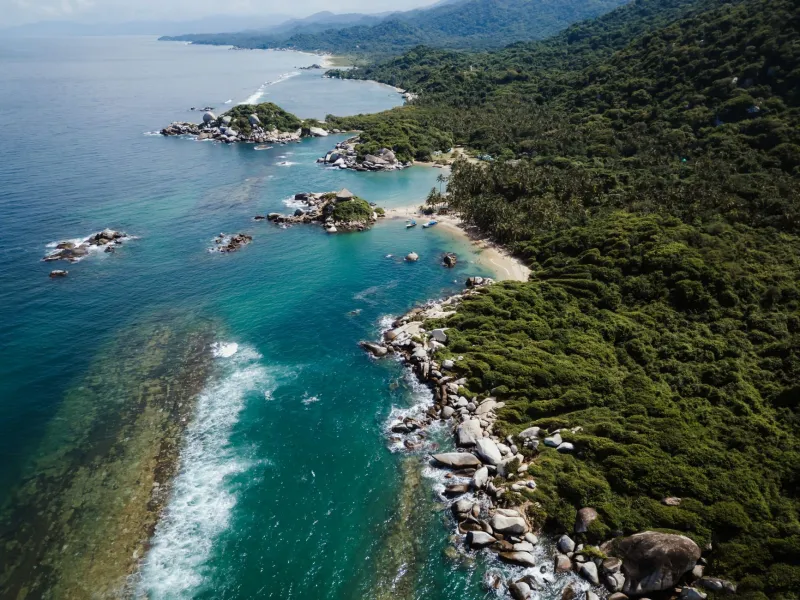
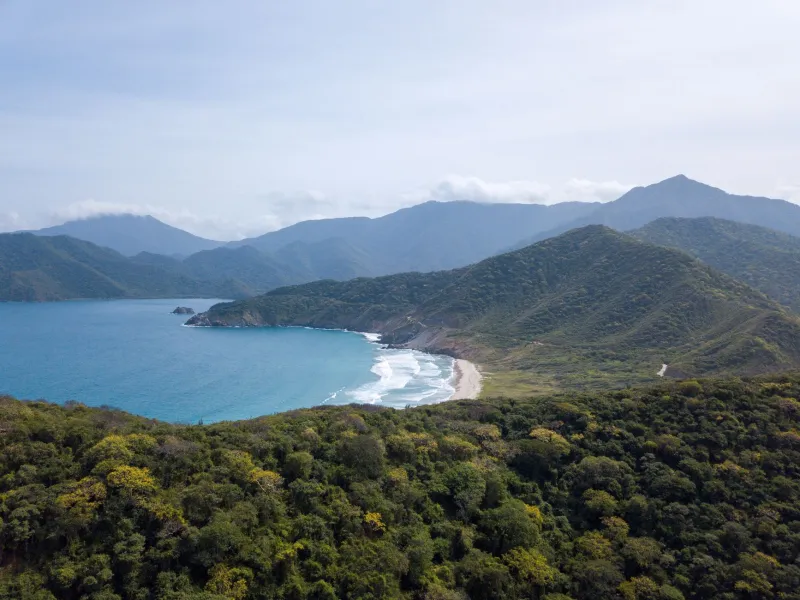
Tayrona sits on Colombia's Caribbean coast, wedged between the Sierra Nevada de Santa Marta mountains and the sea. It's a place where jungle literally meets beach — where you can watch a troop of howler monkeys overhead and then wade into turquoise water twenty minutes later. It's staggering. It's also fragile in ways that don't announce themselves.
The park protects one of the most biodiverse coastal ecosystems in the Western Hemisphere. Coral reefs, tropical dry forests, mangroves, and cloud forest all exist within a relatively compact stretch of land. The Kogui, Wiwa, and Arhuaco indigenous communities have lived in relationship with this landscape for centuries, long before it became a bucket-list destination for travelers flying in from JFK or LAX.
And yet, somewhere along the line, Tayrona became exactly that — a bucket-list destination. Instagram found it. Travel blogs found it. You found it. And now, hundreds of thousands of tourists pass through each year, all of them, presumably, loving it.
The question worth sitting with is whether that love is sustainable.
What 'Sustainable Travel' Actually Means Here
The phrase 'sustainable travel' gets thrown around so casually that it's lost most of its meaning. In a lot of contexts, it's a marketing term — a way to make you feel better about a trip you were already going to take. But in Tayrona, the concept has teeth.
The park has strict visitor limits, seasonal closures, and designated trail systems specifically because unchecked tourism has historically caused real damage — coral bleaching accelerated by sunscreen runoff, trail erosion from foot traffic, waste accumulation in areas that have no infrastructure to handle it. Rangers enforce rules that feel inconvenient until you understand why they exist.
Staying on marked paths isn't bureaucratic nitpicking. It's the difference between a functioning ecosystem and a degraded one. Choosing accommodations that operate with environmental permits matters. Not touching the coral matters. Packing out your trash — all of it — matters in ways that compound across thousands of daily visitors.
But here's where it gets philosophically messy: even if every single visitor does everything right, the cumulative pressure of tourism still takes a toll. Noise pollution affects wildlife behavior. Increased human presence disrupts nesting patterns. The infrastructure required to support tourists — the eco-lodges, the access roads, the boat tours — all carry environmental costs that no amount of mindfulness fully offsets.
The Honest Math
This isn't an argument for closing Tayrona to tourism. It's an argument for being honest about what visiting costs.
Tourism dollars fund park management, ranger salaries, conservation programs, and the ongoing political case for protecting the land at all. Without the economic argument for preservation, Tayrona would face far more destructive pressures — agricultural encroachment, illegal logging, coastal development. In that sense, visitors are part of the conservation equation, not just a drain on it.
But the math only works if the visit is done thoughtfully — and if 'thoughtfully' means more than just following the posted rules. It means asking harder questions before you book.
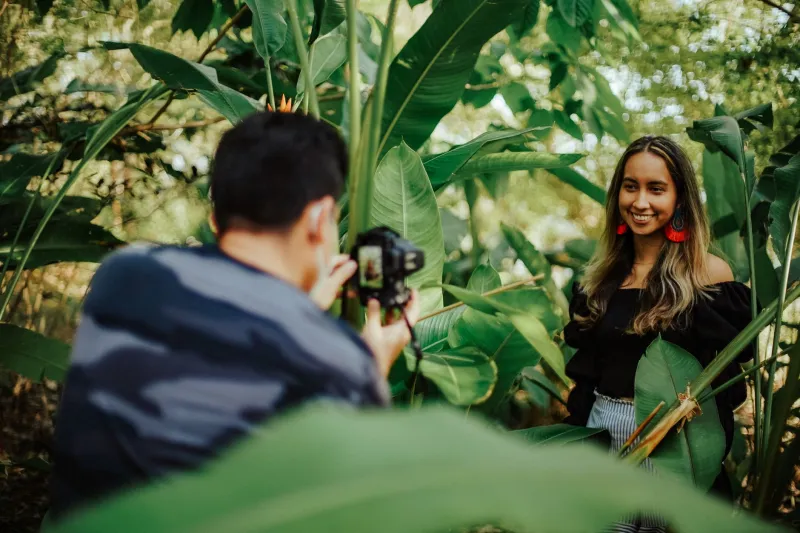
Do you need to visit during peak season, when the park is most strained, or could you go during a quieter period when your footprint is less compounded by the crowd around you? Are you booking with an operator that genuinely invests in the community and the ecosystem, or just one that uses the right buzzwords? Are you treating this like a photo backdrop or like a place that deserves your actual attention and restraint?
What the Kogui Already Know
The indigenous communities of the Sierra Nevada have a concept that roughly translates to the idea that the mountains are the 'heart of the world' — that the health of this specific landscape has spiritual and ecological consequences that ripple outward far beyond its borders. They've been saying, in various ways, that this place is sacred and interconnected for centuries.
Western tourism culture tends to engage with that idea as a poetic add-on — a cool fact to mention at dinner back home. But it's worth taking seriously as a framework. A place that the Kogui consider the heart of the world is not a backdrop. It's not content. It's a living system that existed long before the concept of a 'travel experience' and will need to exist long after our interest in it fades.
The uncomfortable truth is that most of us — and this includes the people writing travel guides — approach Tayrona primarily through the lens of what it offers us. The views. The adventure. The story we get to tell. That framing, even when dressed up in eco-language, is still fundamentally extractive.
So Should You Go?
Probably, yes — but not without sitting with the discomfort first.
Go because Tayrona's preservation depends in part on people caring about it, and it's hard to care deeply about a place you've never experienced. Go because the economic case for conservation requires a tourism industry that actually functions. Go because Colombia's Caribbean coast is extraordinary and the Kogui communities benefit from visitors who engage respectfully.
But go with your eyes open. Go knowing that 'unspoiled' is a myth — that every place humans visit is changed by the visit, and that the goal isn't to find somewhere pristine but to engage with imperfect, complicated, real ecosystems in ways that leave them better than you found them.
That means fewer photos, more observation. It means choosing the slower, harder path when it's the one that causes less damage. It means tipping guides generously, respecting closures without argument, and being honest with yourself when your desire for a particular experience conflicts with what the park actually needs.
Tayrona will get under your skin. That's not a cliché — it genuinely happens to people. The jungle sounds at night, the quality of the light on the water, the feeling of being somewhere that operates on its own terms entirely. Let it. And then let that feeling inform how you behave while you're there, and what you advocate for when you leave.
The paradox doesn't disappear. But it gets a little more manageable when you stop pretending it isn't there.