Tayrona in the Rain: Why the Wet Season Is a Jungle Adventurer's Best-Kept Secret
There's a version of Tayrona National Park that most American travelers never see. Not because it's hidden behind a permit wall or locked inside some exclusive eco-lodge itinerary — but because it exists during the months when everyone else has already booked their flights somewhere sunny and predictable.
The wet season in Tayrona runs roughly from May through November, with the heaviest rains typically arriving in October and November. For a lot of tourists, those months are a hard pass. Muddy trails, unpredictable downpours, the general inconvenience of being soggy — it doesn't exactly scream vacation. But if you're the kind of traveler who shows up for the real thing rather than the postcard version, the rainy season in this corner of Colombia's Caribbean coast might just become your favorite travel decision you've ever made.
The Jungle Actually Comes Alive
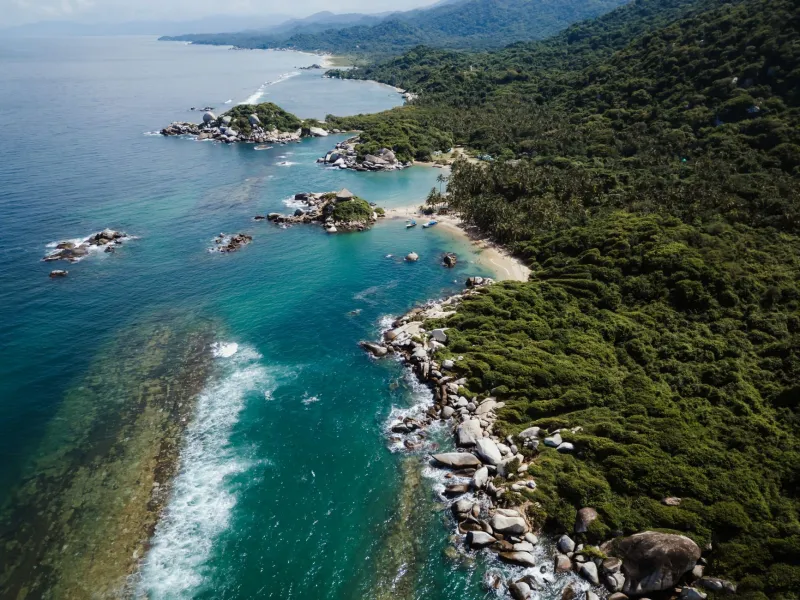
Here's something the dry-season brochures won't tell you: Tayrona's biodiversity doesn't just survive the rain — it peaks because of it. The park sits at a remarkable ecological crossroads where Caribbean coastline meets the foothills of the Sierra Nevada de Santa Marta, the world's highest coastal mountain range. When the rains arrive, the jungle responds like it's been waiting all year for exactly this moment.
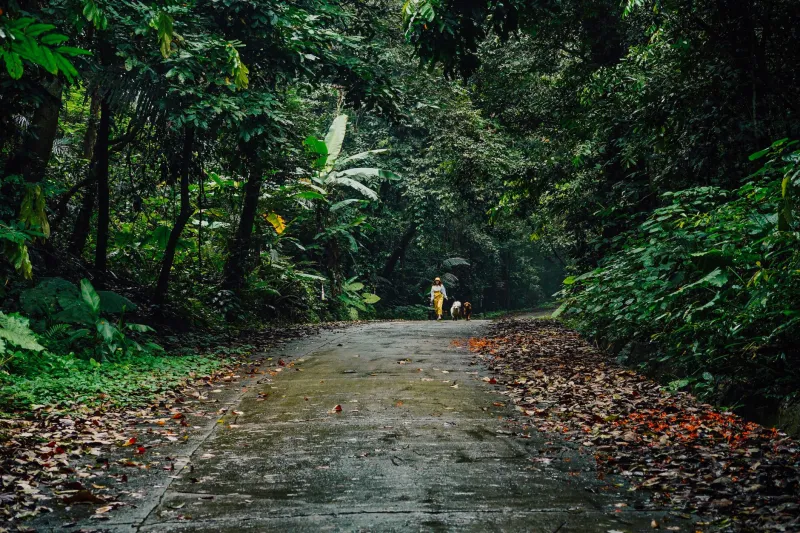
Vegetation that looked dusty and muted in February turns an almost aggressive shade of green. Waterfalls that were little more than trickles during the dry months suddenly roar back to full volume. Streams that were barely worth hopping across become fast-moving channels that force you to slow down, pay attention, and actually engage with the landscape.
For wildlife watchers, the wet season is genuinely exciting. Amphibians that spend the dry months tucked away become suddenly, dramatically active. Migratory birds pass through in higher numbers. The howler monkeys seem louder (if that's even possible), and the dense canopy cover means animals aren't retreating from the heat the way they do when the sun is hammering everything. If you came to Colombia for wildlife, the wet season gives you more of it — not less.
Fewer People, Full Stop
Let's be honest about what peak season in Tayrona actually looks like. During December through March, the park's most famous beaches — Cabo San Juan, Arrecifes, La Piscina — fill up fast. Campsites book out weeks in advance. The trail from the main entrance at El Zaino turns into something resembling a slow-moving line at a theme park. It's beautiful, sure, but it's also crowded in a way that can genuinely undercut the wild, remote feeling you came here for.
Shift your trip to September or October and the dynamic changes completely. You'll share trails with a fraction of the usual foot traffic. You can linger at viewpoints without someone else's drone hovering nearby. The hammock spots at Cabo San Juan — the ones that are essentially impossible to snag during peak months — suddenly become available. The park doesn't disappear just because it's raining. It just gets quieter, and in a place this beautiful, quiet is a serious upgrade.
What to Actually Pack
Going to Tayrona in the wet season without the right gear is where a lot of travelers go wrong. This isn't about being paranoid — it's about not letting avoidable discomfort ruin an otherwise incredible trip.
Start with your footwear. Waterproof trail shoes or lightweight hiking boots with solid ankle support are non-negotiable. The trails between beaches involve real terrain — roots, rocks, steep descents — and they get genuinely slippery when wet. Flip-flops are fine for the beach; they're a liability on the trail.
A lightweight, packable rain jacket is worth more than almost anything else in your bag. Not a poncho, not a garbage bag — an actual rain layer that breathes, packs small, and doesn't make you sweat through it the moment the sun comes back out (and it will come back out, often within the hour). Colombia's Caribbean coast operates on its own meteorological schedule, and rain here tends to arrive hard and leave fast.
For your gear: dry bags or waterproof stuff sacks are essential for your camera, phone, and anything else that can't get wet. A 20-liter daypack with a rain cover works well for day hikes. And if you're camping, bring a quality tent — not the ultralight summer setup you use in Colorado. Humidity and overnight rain are real factors here.
Finally, pack more than one set of clothes and plan to rotate. Fabric that doesn't dry is miserable in a humid jungle environment. Quick-dry synthetics and merino wool are your friends.
The Trails That Reward Wet-Season Hikers
Not every trail in Tayrona makes equal sense in the rain, and knowing the difference matters. The main coastal route — connecting El Zaino to Cabo San Juan through Arrecifes — remains the park's backbone and is entirely manageable in wet conditions if you're wearing the right shoes and taking your time.
The inland routes, particularly those that push up toward higher elevation, are where things get genuinely interesting after rain. The forest canopy closes in, the light turns that deep green-gold that photographers chase, and the soundscape shifts into something almost cinematic — rain on leaves, water moving through rocks, birds calling from places you can't quite see. These trails demand more attention and more physical effort in wet conditions, and that's precisely what makes them worth it.
If you're considering the route toward the Pueblito archaeological site — an ancient Tairona settlement that sits higher in the park — the wet season adds a layer of atmospheric intensity that the dry months simply can't match. Just be prepared for steeper, muddier conditions and build in extra time.
The Price Factor (It's Significant)
Adventure travel in the US has trained us to expect that the best experiences come with the highest price tags. Tayrona's wet season quietly breaks that rule. Accommodation in the gateway town of Santa Marta, eco-lodges near the park entrance, and even the park's own camping infrastructure all tend to drop in cost during the low season. You're not sacrificing quality — you're just showing up when the crowds have thinned and the operators are more flexible.
For budget-conscious travelers — or anyone who'd rather spend money on experiences than on premium pricing during peak demand — the math is pretty compelling.
Embracing the Uncomfortable Parts
Here's the honest part: the wet season in Tayrona isn't always comfortable. You will get rained on. Trails will be muddier than you'd like. There will be a morning or two where the sky just opens up and you're stuck under a palm roof waiting it out with a cup of tinto, watching the rain hit the water.
And those moments? They're actually some of the best ones. The kind of travel that only happens when you stop trying to control the conditions and just let the place be what it is.
Tayrona in the rain is still Tayrona — one of the most extraordinary stretches of wild coast anywhere in the Western Hemisphere. It just comes with fewer people and a lot more soul.