How Tayrona Broke My Travel Brain (In the Best Possible Way)
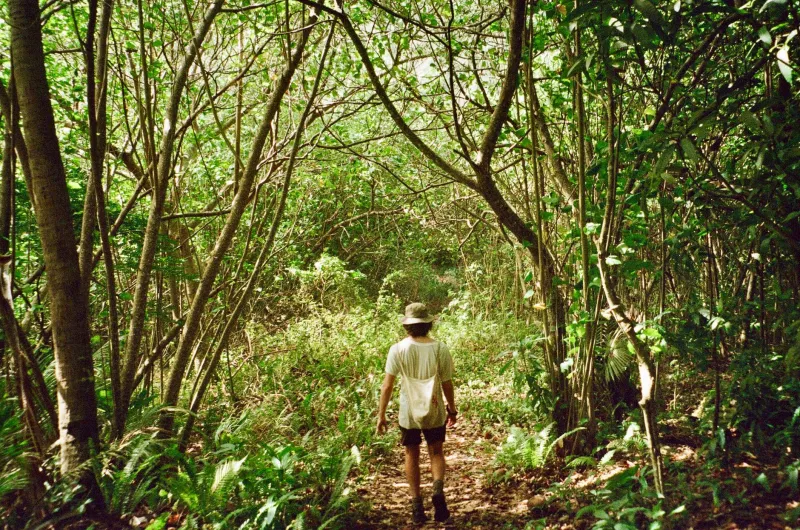
Katie Mercer flew into Santa Marta from Miami expecting a tropical vacation. She'd seen the photos — the palm trees arching over turquoise water, the hammocks strung between boulders, the monkeys posed like they were auditioning for a screensaver. She booked five nights, packed her best swimsuits, and planned to spend most of her time horizontal.
She came back to Fort Lauderdale two weeks later with muddy boots, zero photos she actually liked, and what she describes as "a completely broken relationship with resort travel."
"I tried to go to Cancún the following spring and I literally couldn't do it," she says. "I sat by the pool for a day and a half and felt like I was in a coma. I kept thinking about the jungle."
Katie isn't alone. Among repeat visitors to Tayrona National Park on Colombia's Caribbean coast, there's a phenomenon that comes up again and again in conversation: the park changes you. Not in a vague, inspirational-poster way. In a specific, measurable, sometimes-inconvenient way that reshapes how you think about what travel is actually for.
The Psychology of Unscripted Nature
Dr. Renata Coelho, a travel psychologist based in New York who works with clients navigating what she calls "re-entry dissonance" after intense travel experiences, says Tayrona fits a very specific psychological profile.
"There's a category of travel environments that force genuine presence," she explains. "Places where the conditions don't allow you to be passive. You're hiking in heat, navigating uneven terrain, dealing with wildlife that doesn't care about your schedule. Your nervous system has to actually engage. And when it does, something shifts."
That shift, she says, is partly neurological. Sustained engagement with unpredictable natural environments activates systems in the brain associated with heightened attention, sensory processing, and what researchers sometimes call "soft fascination" — the kind of low-effort, high-reward mental absorption you get from watching waves or listening to rain. Unlike the stimulation of scrolling a phone or watching TV, this kind of engagement leaves you feeling restored rather than depleted.
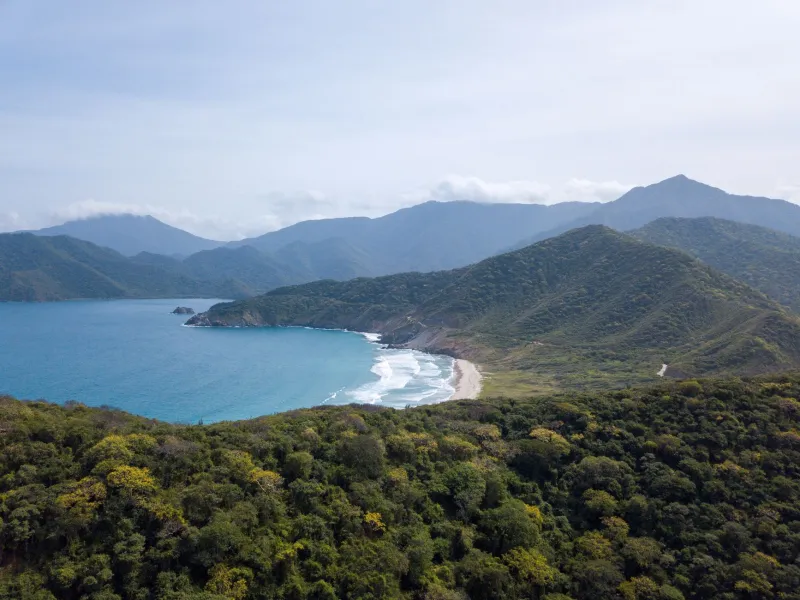
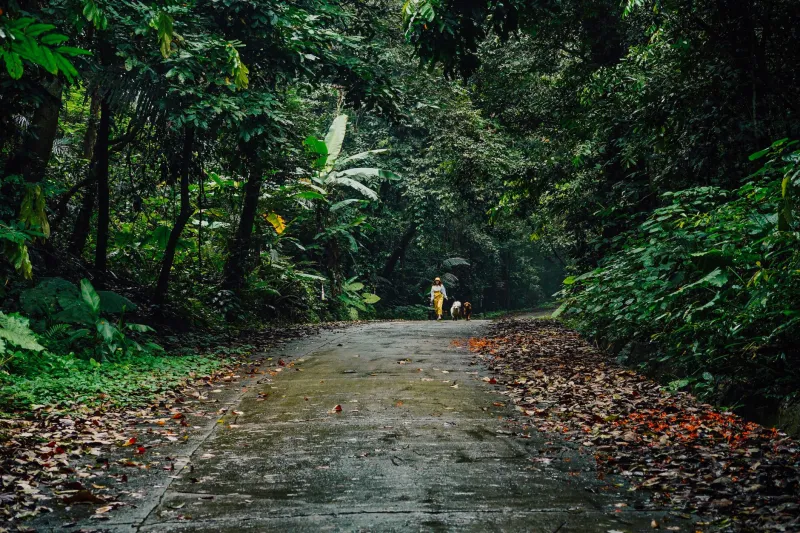
Tayrona delivers this in industrial quantities. The park covers roughly 150 square miles of Caribbean coastline and dense jungle on Colombia's Sierra Nevada de Santa Marta. There are no paved roads inside the park. Cell service is unreliable. The trails are real trails — rocky, rooted, occasionally flooded. The animals are wild. The weather does whatever it wants.
For many American visitors conditioned by highly managed travel experiences — theme parks, all-inclusives, curated food tours — this is genuinely disorienting at first. And then, for a significant number of them, it becomes the thing they keep chasing.
What Instagram Gets Wrong About This Place
Part of what makes the Tayrona effect so interesting is that it runs counter to what the park's social media presence would suggest. The images that circulate most — those crystal lagoons, those perfect hammock shots — imply a passive, aesthetic experience. Show up, look pretty, document it.
But the travelers who come back changed aren't the ones who got the shot. They're the ones who put the phone away because they were too sweaty and focused to take it out.
"I stopped photographing things on day two," says Marcus Webb, a graphic designer from Portland who has visited Tayrona three times. "Not because I made some noble decision about it. I just physically couldn't be doing both things at once. The trail demanded all of me."
This is a pattern Dr. Coelho recognizes. "Instagram-culture travel is fundamentally extractive," she says. "You're there to take something — a content asset. Tayrona resists that because the environment is too demanding. You can't extract from a place that's actively requiring your full attention."
The result, for many visitors, is a kind of cognitive reset. They return home with a new framework for evaluating travel experiences — one that prioritizes engagement over aesthetics, difficulty over comfort, and genuine connection over documentation.
The Comfort Trap — And How Tayrona Breaks It
American travel culture has spent decades optimizing for comfort. Loyalty points. Upgrade paths. Turndown service. Skip-the-line passes. There's nothing inherently wrong with any of this, but it creates a subtle expectation: that the quality of a travel experience is proportional to how little friction it contains.
Tayrona inverts that completely.
The accommodations inside the park range from hammocks to basic eco-cabins. The food options are limited. You carry what you need. The famous beach at Cabo San Juan requires a hike that'll have you questioning your life choices if you're not prepared for it. There are no shortcuts, no concierge to call, no app that makes it easier.
And yet — and this is the part that surprises people — the satisfaction is enormous.
"I've stayed in some genuinely fancy hotels," says Jenna Park, a travel writer from Chicago who visited Tayrona on assignment and returned on her own dime six months later. "And none of them gave me what sleeping in a hammock above that beach gave me. There's something about earning an experience that makes it land differently."
Psychologists call this the "effort heuristic" — we assign more value to things we work for. Tayrona is, among other things, a masterclass in earned reward.
Returning Home Different
The downstream effects of a Tayrona trip are real and, for some travelers, lasting. Multiple repeat visitors describe returning home with changed spending habits — less interest in luxury travel, more interest in national parks and wilderness areas. Several mention becoming more engaged with conservation issues. A few describe it as the beginning of a broader environmental awakening.
"I came back and immediately started researching Colombia's conservation situation," says Katie Mercer. "Then I started reading about deforestation more broadly. It's like the park cracked something open."
Dr. Coelho isn't surprised. "When you have a genuinely immersive experience in a wild ecosystem, you develop what researchers call 'place attachment.' You feel connected to that specific environment. And once you feel connected to one wild place, it's easier to feel connected to wild places generally. The empathy becomes transferable."
None of this means Tayrona will change every visitor. Plenty of people go, sweat through their shirts on the trail to Arrecifes, get their hammock photo, and fly home with their travel philosophy intact. The park isn't magic. It's mud and heat and howler monkeys and staggering beauty.
But for the travelers who let it — who go without a rigid agenda, who tolerate the discomfort long enough to get past it — Tayrona has a way of quietly rearranging things. Your relationship to comfort. Your tolerance for manufactured experiences. Your sense of what a trip is actually supposed to give you.
Katie Mercer put it simply: "I thought I was going to Colombia to relax. Instead I got a completely different idea of what relaxing even means."
She's already planning her second trip.