The Lost City Trek Isn't a Casual Hike — Here's How to Actually Be Ready for It
Every year, travelers roll into Santa Marta, Colombia, fresh off a beach day in Tayrona, and decide on a whim to book the Ciudad Perdida trek. They've seen the photos — mossy stone terraces climbing into cloud-kissed jungle, indigenous Kogi guides leading the way through a landscape that feels completely untouched. It looks hard but doable. Like a good challenge.
Some of those people have a life-changing experience. Others spend four days miserable, nursing blisters and heat exhaustion, wondering how a hike billed as "moderate" wrecked them so thoroughly.
The difference, almost always, comes down to preparation. Not the kind where you skim a packing list the night before. Real preparation — the kind that starts weeks out and covers your body, your head, and your expectations.
First, Let's Talk About What This Trek Actually Is
Ciudad Perdida — or Teyuna, as the indigenous communities call it — is a 26-mile round-trip journey through the Sierra Nevada de Santa Marta mountain range. You're looking at four to six days depending on your operator and pace, with daily hiking distances ranging from five to ten miles. That doesn't sound brutal on paper, until you factor in the terrain.
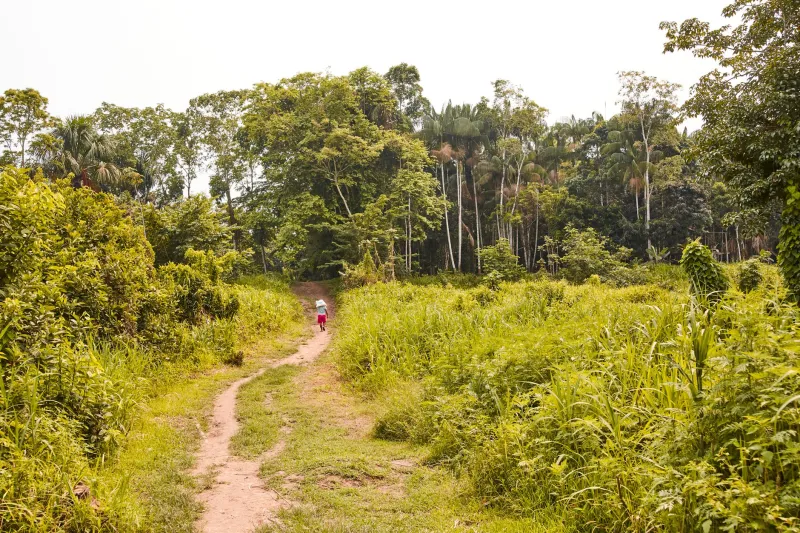
This isn't a groomed trail system. You're crossing rivers on foot (multiple times), climbing near-vertical root-covered slopes when it's wet, and doing all of it in heat and humidity that can genuinely shock people who've never experienced a tropical jungle environment. The famous 1,200 stone steps at the end — the ones that lead up to the ancient city itself — feel almost ceremonial by the time you get there, but they arrive after days of accumulated fatigue.
This is a legitimate backcountry experience, not a scenic walk with a dramatic finale.
The Fitness Baseline Most People Ignore
Here's the uncomfortable truth: if you can't comfortably hike eight miles with a loaded daypack on varied terrain, you're not ready for Ciudad Perdida. That's not gatekeeping — it's just math.
The guides are excellent and the group pace is manageable, but nobody is going to carry you across a river at mile six of day three. The jungle environment amplifies physical strain in ways that flat-terrain hikers consistently underestimate. Your cardiovascular system works harder in heat and humidity. Your muscles fatigue faster. Recovery overnight is slower when you're sweating through your sleep.
A reasonable prep window is six to eight weeks of intentional conditioning. That means:
- Weekly long hikes of at least six to eight miles, ideally on trails with elevation gain
- Stair climbing or incline treadmill work to prepare your quads and glutes for sustained uphill
- Loaded pack training — hiking with the weight you'll actually carry, not just a water bottle
- Two or three cardio sessions per week that get your heart rate elevated for 30-plus minutes
If you're based somewhere flat like Chicago or Houston, find a stairwell, a parking garage, or a treadmill with incline settings. It's not glamorous, but it works.
Acclimatization Is Not Optional
Santa Marta sits at sea level. The Ciudad Perdida trail climbs to around 4,000 feet at its highest point, and the jungle humidity makes the heat feel relentless from the very first morning. If you fly in and immediately start trekking, you're asking your body to adapt to multiple stressors at once.
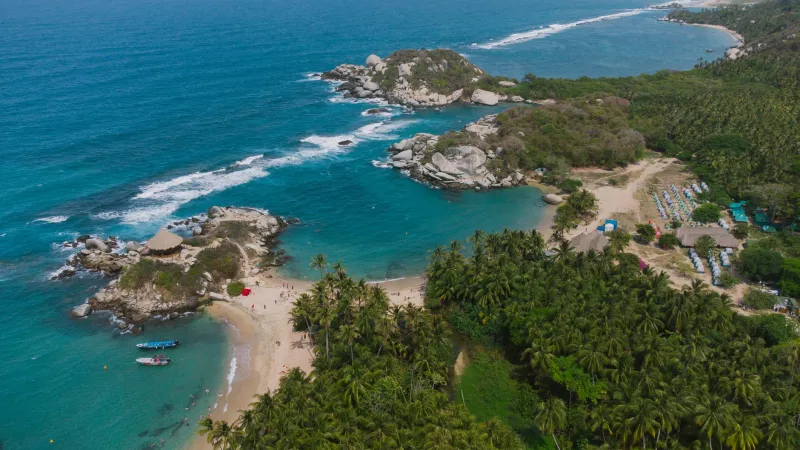
Building in two to three days in the region before your trek starts makes a measurable difference. Spend that time exploring the lower trails in Tayrona National Park — the paths to Cabo San Juan or Arrecifes are solid options that get your legs moving in similar heat without committing to a multi-day expedition. Walk around Santa Marta. Eat well. Hydrate aggressively.
Hydration deserves its own emphasis here. Most Americans walk around chronically under-hydrated at home. In the Sierra Nevada jungle, you'll sweat more than you expect, and electrolyte balance matters. Bring electrolyte packets or tablets — not just water — and start the habit of drinking consistently before you even feel thirsty.
The Mental Game Nobody Warns You About
Physical fitness gets all the attention, but the psychological dimension of Ciudad Perdida is where a lot of treks quietly unravel.
You are going to have bad moments. There will be a river crossing where the rocks are slippery and the current is stronger than you'd like. There will be an afternoon where the rain comes sideways and the trail turns to soup and your feet have been wet for six hours. There will be a point, probably on day two or three, where you wonder what exactly you were thinking.
This is normal. It's also, in retrospect, the point.
What helps is going in with honest expectations rather than highlight-reel fantasies. Talk to people who've done the trek — not just the ones who posted triumphant summit photos, but the ones who'll tell you about the leeches and the humidity and how they almost quit on day three. Read accounts that don't skip the hard parts. Go in knowing that discomfort is part of the deal, and that your ability to move through it is exactly what makes the arrival at the ancient city feel earned in a way that, say, a cable car to a viewpoint simply doesn't.
Mindfulness practices — whether that's meditation, breathwork, or just the habit of focusing on the next ten steps rather than the next two days — are genuinely useful on this trail. Pack that skill alongside your rain jacket.
Gear That Actually Matters
You don't need to be a gear obsessive, but a few items are non-negotiable:
- Waterproof hiking boots with ankle support — trail runners are popular but leave you vulnerable on wet river crossings
- A quality rain jacket — not a poncho, which catches on everything in dense jungle
- Moisture-wicking base layers — cotton is your enemy in tropical humidity
- Trekking poles — your knees will thank you on the descents, and they're a lifesaver on slick river rocks
- Blister prevention — liner socks, body glide, or whatever system you've tested before
- Headlamp with extra batteries — early morning starts happen
Leave the heavy camera gear behind unless you're a professional. Your phone camera is fine, and every extra pound is a real cost over five days.
Why It's Worth Every Bit of This
Here's the thing about Ciudad Perdida that's hard to fully communicate until you've stood at the top of those stone steps: the difficulty is inseparable from the reward.
Machu Picchu is spectacular. No argument. But you can get there by train. The Tayrona beaches are stunning and genuinely accessible. But Ciudad Perdida requires something from you — sustained effort, tolerance for discomfort, a willingness to show up in a landscape that doesn't bend to your comfort level.
The ancient city itself, built by the Tairona people around 800 CE and older than Machu Picchu by several centuries, sits quietly in the jungle as if it's been waiting for you specifically. The stone terraces, the ceremonial platforms, the view down into the valley — it all lands differently when you know what it took to get there.
That feeling of accomplishment is real, and it's proportional to the challenge you actually faced. But only if you showed up ready for it.
Don't wing this one. Prepare like you mean it, and Ciudad Perdida will deliver something that stays with you long after your tan fades.