Something Shifts in the Jungle: The Unexpected Ways Tayrona Gets Under Your Skin
You Come for the Views. You Leave Carrying Something Else.
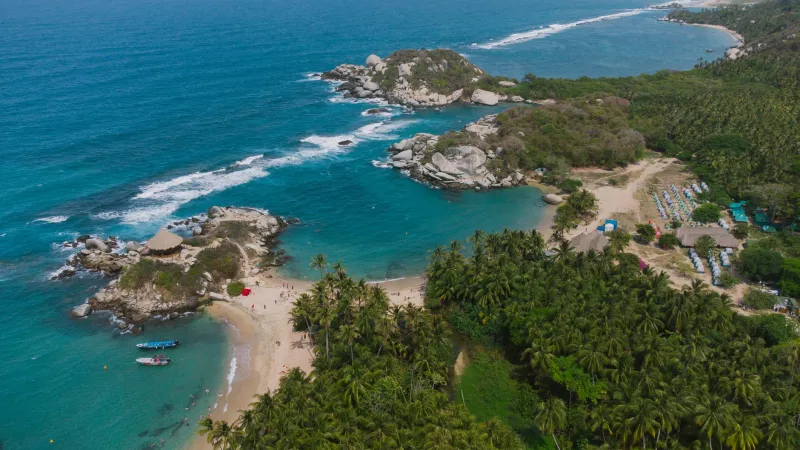
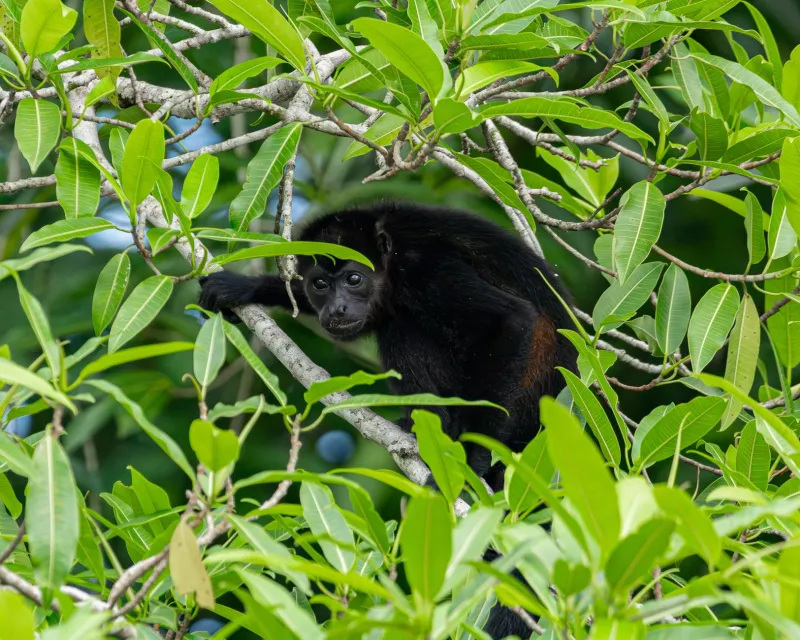
Most people who visit Tayrona National Park in northern Colombia will tell you the same thing at first: they came for the Instagram moments. The turquoise water crashing against granite boulders. The howler monkeys at sunrise. The hammocks strung between palms.
But ask them a few months later what they actually remember, and the conversation takes a turn.
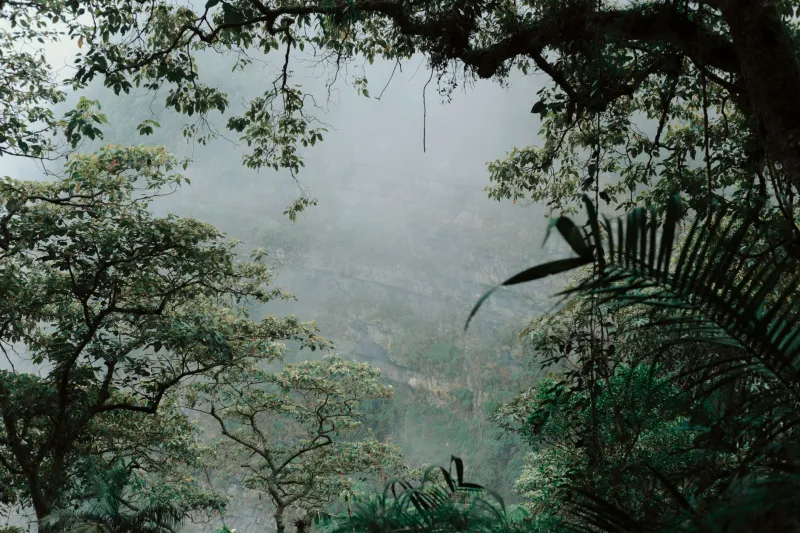
"I couldn't sleep for the first two nights because of all the noise," says Marcus, a 34-year-old landscape architect from Portland who visited in 2022. "Not bad noise — just constant noise. Frogs, insects, rain on leaves, things moving in the dark. And by the third night, I realized I wasn't anxious anymore. I was just... part of it."
That shift — from discomfort to belonging — is something a surprising number of Tayrona visitors describe. And it turns out there might be real science behind why a few days inside one of Colombia's most biodiverse ecosystems can quietly rewire the way you think.
The Sensory Overload That Isn't Actually Overwhelming
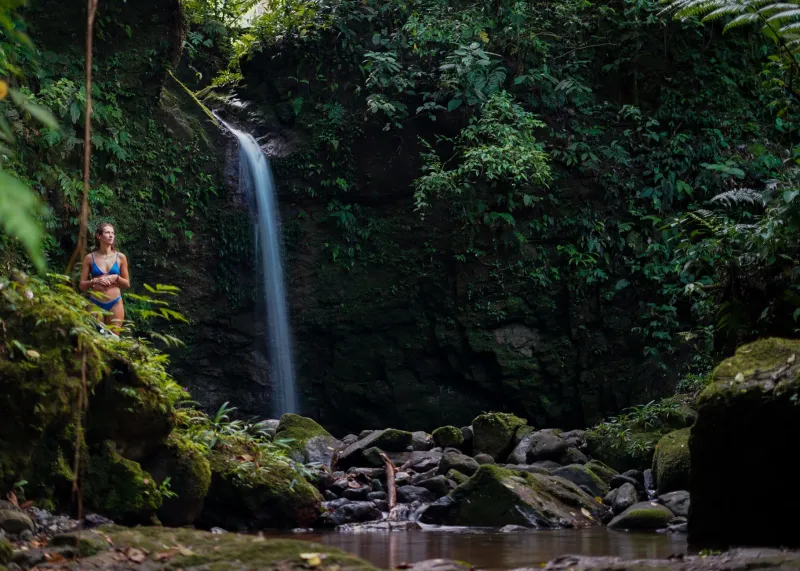
Tayrona isn't a gentle introduction to nature. The park sits at the northern edge of the Sierra Nevada de Santa Marta mountain range, where the jungle meets the Caribbean Sea in a collision of ecosystems that feels almost theatrical. The humidity is thick. The canopy is loud. The trails are uneven and muddy, and the wildlife doesn't wait for you to be ready.
For Americans used to manicured national parks with paved walkways and cell service, this can feel like a lot. And initially, it is.
But researchers studying what's sometimes called "awe experiences" — moments of encountering something vast and beyond your immediate comprehension — have found that environments like Tayrona are particularly good at triggering them. A 2020 study published in the journal Emotion found that awe-inducing experiences in natural settings consistently reduced self-referential thinking, the mental loop where we obsess over personal problems, social anxieties, and to-do lists.
In plain terms: the jungle is too big and too loud for your brain to keep worrying about your inbox.
"There's a concept called 'soft fascination' in environmental psychology," explains Dr. Rachel Kwan, a researcher who studies nature-based wellbeing at UC Berkeley. "Unlike hard focus — the kind you need to drive or answer emails — soft fascination lets your brain enter a kind of restorative state. Natural environments with high biodiversity, varied sounds, and unpredictable movement are especially effective at triggering it."
Tayrona, by almost any measure, checks every one of those boxes.
The People Who Keep Coming Back
What's harder to explain with science is the pull. The specific, irrational desire to return to a place that was, objectively, kind of difficult.
Sarah, a 29-year-old teacher from Austin, visited Tayrona on a solo trip in 2021. She hiked in from the Calabazo entrance, camped for four nights, and came home with bug bites she described as "genuinely alarming." She booked her return trip six weeks later.
"I don't know how to explain it except that I felt more like myself there than I have anywhere else," she says. "And I know that sounds like something you'd put on a bumper sticker, but I mean it literally. I made decisions differently. I ate when I was hungry. I slept when it got dark. I wasn't performing anything for anyone."
That theme — the stripping away of performance — comes up again and again when you talk to Tayrona veterans. The park has no Wi-Fi in most of its camping areas. Phone signals are unreliable. There's no room service, no curated playlist, no algorithm deciding what you should look at next. You're left with the trail, the heat, and whatever you brought with you mentally.
For solo travelers especially, that can be confronting. And then, gradually, clarifying.
"I cried on the second day and I had no idea why," admits Jordan, a 41-year-old marketing director from Chicago who made the trip alone after a rough year. "Not sad crying. Just... release, I guess. Something about being that small in that much nature. I think I needed to be reminded that the world is enormous and most of my problems are not."
Why Wilderness Transforms — and Why Tayrona Does It Differently
Nature therapy and ecopsychology have been growing fields in the US for years, with forest bathing retreats popping up everywhere from the Catskills to the Cascades. But there's something specific about tropical biodiversity — the layered complexity of a place like Tayrona — that seems to hit differently than a quiet walk through a pine forest.
Part of it is novelty. The brain pays more attention to unfamiliar environments, which means more of your experience actually gets encoded as memory. That's why a week in Tayrona can feel, in retrospect, like much more time than it was.
Part of it is also physical. The heat demands presence. The terrain demands attention. You can't drift into autopilot on a trail where tree roots are trying to catch your ankles and a troupe of capuchin monkeys is debating whether to steal your lunch.
And part of it, honestly, might just be Colombia. The culture outside the park — the warmth of the people in the nearby town of Santa Marta, the food, the music drifting out of doorways — creates a context that softens travelers before they even reach the trailhead. You arrive somewhere that doesn't take itself too seriously, and something in you unclenches.
What You Bring Back
None of the travelers interviewed for this piece came home with a grand epiphany. No one quit their job or moved to the jungle (though a few admitted they thought about it). The changes were quieter than that.
Marcus started spending more time in the parks near his house in Portland — actually sitting in them, not just passing through. Sarah said she got better at tolerating uncertainty. Jordan started sleeping with the window open.
"It sounds small," Jordan says. "But I think that's the point. Tayrona didn't give me answers. It just made me less afraid of not having them."
That's the thing about a place that exists on its own terms, completely indifferent to your schedule and your storyline. It doesn't promise transformation. It just offers four million acres of jungle, a coastline that looks like it was designed by someone who had never heard the word 'modest,' and enough silence — eventually — to hear yourself think.
Whether you're ready for what you hear is up to you.