Tayrona Won't Coddle You — And That's Exactly What Nobody Tells You
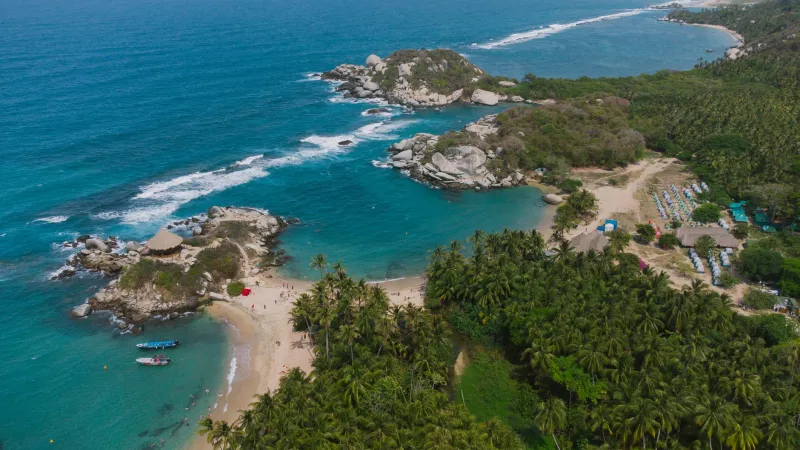
Let's start with the photo you've probably seen: a sun-drenched lagoon, palm trees doing their thing, water so blue it looks digitally enhanced. Maybe there's a person in a hammock. Maybe there are boulders the size of school buses framing the shot perfectly. You've saved it. You've shown it to friends. You've quietly decided you need to go.
Here's the thing — that photo is real. Tayrona National Park on Colombia's Caribbean coast genuinely looks like that. Parts of it, at certain times of day, in certain lighting conditions, absolutely deliver.
But if that photo is the only thing informing your trip expectations, you are going to have a very rough first 48 hours.
This isn't a discouragement piece. Tayrona is extraordinary. But it's extraordinary in the way that genuinely wild places are — on its own terms, not yours. And the gap between Instagram expectation and muddy reality is wide enough that a lot of visitors either quit early or spend half their trip frustrated because the experience isn't matching the fantasy they built.
So let's close that gap.
The Heat Is Not Aesthetic
Every travel post about Tayrona mentions it's hot. None of them really convey what that means.
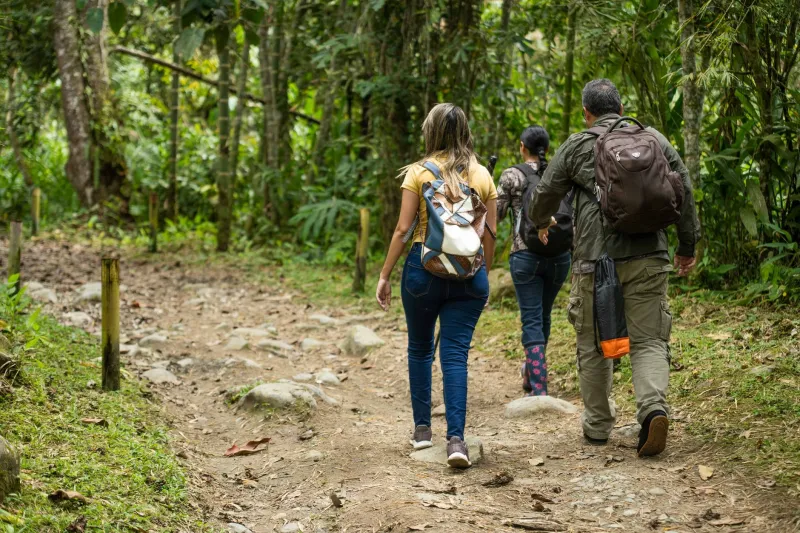
We're talking about a tropical Caribbean environment with dense jungle humidity on top of direct equatorial sun. The main trail from the park entrance at El Zaino to the beach at Cabo San Juan — the one everybody does — runs roughly four miles each way. It is not flat. It is not shaded the entire time. And it is not the kind of heat where you feel a little warm and reach for your water bottle.
It is the kind of heat where your clothes are completely soaked within 20 minutes and stay that way. Where the air itself feels like something you're pushing through rather than breathing. Where you stop and wonder, genuinely, whether your body is functioning correctly.
If you live in Phoenix or Miami, you have a head start. If you're coming from Seattle or Minneapolis in January and your last outdoor activity was shoveling a driveway, you need to plan accordingly. Acclimatize in Santa Marta for a day or two first. Hike in the early morning before 9 a.m. if you can. Carry more water than you think you need. Electrolytes aren't optional.
The Wildlife Isn't There for You
Yes, there are howler monkeys. Yes, they're incredible. Yes, you might see them up close.
You might also see them tear open an unattended backpack in under 90 seconds. They are fast, they are clever, and they have zero interest in your boundaries or your snacks. Iguanas will steal food off your plate if you're eating outside. Coatis — those raccoon-adjacent mammals with the long snouts — are charming and absolutely will go through your bag if you set it down.
The wildlife in Tayrona is wild. That's the whole point. But it means you need to behave accordingly. Never leave food unattended. Never feed animals. Never try to pet anything. Keep your pack closed and ideally secured. And understand that a wildlife encounter in Tayrona might not be the peaceful communion with nature you envisioned — it might be a monkey aggressively trying to take your granola bar while you're still holding it.
Also: there are snakes. Most are harmless. Some aren't. Watch where you step, especially on trails after rain. Don't reach into vegetation you can't see through. This isn't meant to scare you — it's meant to keep you from making a dumb mistake because you were too busy looking at your phone to watch the trail.
The "Beach" Situation Is Complicated
Not every beach in Tayrona is swimmable. This is a big one that a lot of visitors miss entirely.
Several of the most photographed beaches — including parts of Arrecifes, arguably the park's most iconic stretch — have strong currents and rough surf that make swimming actively dangerous. People have drowned there. The signs are in Spanish. If you don't read Spanish and you're not paying attention to what other people are doing (or not doing) in the water, you could walk straight into a serious situation.
Swimmable beaches exist — Playa Cristal, La Piscina, Cabo San Juan under the right conditions — but you need to know which is which before you wade in. Ask the park rangers. Ask your accommodation staff. Don't assume that because it looks calm, it is calm.
Amenities Are Not a Thing
There is no ATM inside the park. There is limited cell service. The food options are basic — rice, beans, fried fish, fruit, the occasional arepa. If you have specific dietary requirements that aren't "I eat normal food," you should bring supplementary supplies from Santa Marta.
Accommodation inside the park ranges from hammocks to basic eco-cabins. They are clean enough. They are not comfortable by American hotel standards. There is no air conditioning. There is no reliable hot water. The bathroom situation in some areas is communal and basic.
This is not a complaint — it's the park doing what a national park should do, which is prioritize ecosystem preservation over visitor luxury. But if your baseline expectation is a Marriott with a swim-up bar, you need to recalibrate before you arrive, not after.
Weather Will Rewrite Your Plans
Tayrona operates on its own meteorological schedule, and it does not care about your itinerary.
The park has two dry seasons (roughly December through March, and July through August) and two wet seasons. During the wet season, trails can flood, certain beaches become inaccessible, and the park occasionally closes sections entirely for safety or ecological reasons. The park also closes completely for several weeks each year — typically in February and in late May or early June — to allow the ecosystem to recover from visitor traffic.
Check the closure schedule before you book anything. Seriously. This is not a minor logistical footnote — it has derailed entire trips for people who didn't know about it.
Even during dry season, afternoon thunderstorms are common. Plan your hiking for mornings. Bring a lightweight rain jacket regardless of what the forecast says.
Cultural Context Matters
The land within and around Tayrona is deeply significant to the Kogui, Arhuaco, and Wiwa indigenous communities. These aren't just background details — they're living, active communities with their own governance, their own relationship to the land, and their own protocols for outsider interaction.
Some areas of the park are off-limits to visitors because of their sacred significance. These restrictions exist for real reasons. Ignoring them isn't adventurous — it's disrespectful. If a ranger or a local guide tells you an area is restricted, that's the end of the conversation.
Also: bargaining aggressively with local vendors, treating park workers as personal staff, or behaving with the entitlement that some travelers export from home — all of that lands badly here. Colombia is not a theme park designed for your vacation. Tayrona especially is not.
So Should You Still Go?
Absolutely. Without hesitation.
But go prepared. Go knowing it will be harder than the photos suggested. Go knowing you'll sweat through your shirt before 10 a.m. and love it anyway. Go knowing the difficulty is part of the deal — that the effort is what makes the reward feel like a reward.
The travelers who struggle in Tayrona are almost always the ones who showed up expecting the Instagram version. The ones who have the time of their lives are the ones who showed up ready for the real thing.
The real thing is so much better.