What Keeps Tayrona Wild: The Fragile Forces Standing Between This Park and Another Cancún
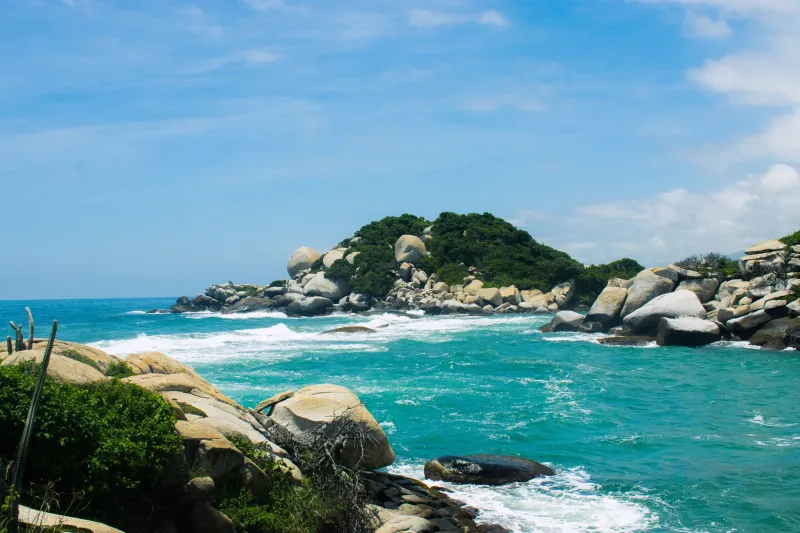
Stand on the rocks at Cabo San Juan and look out at the Caribbean. There's no swim-up bar. No DJ booth. No matching beach chairs lined up like a parking lot. Just jungle tumbling down to boulders, pelicans dive-bombing the surf, and the kind of silence that makes you feel slightly embarrassed about how much of your life you've spent indoors.
Tayrona National Park is genuinely different from almost every other Caribbean destination accessible to American travelers. The question worth asking — especially now, as Colombia's tourism numbers keep climbing — is why. And more urgently: how much longer will that difference hold?
Geography Did the Heavy Lifting First
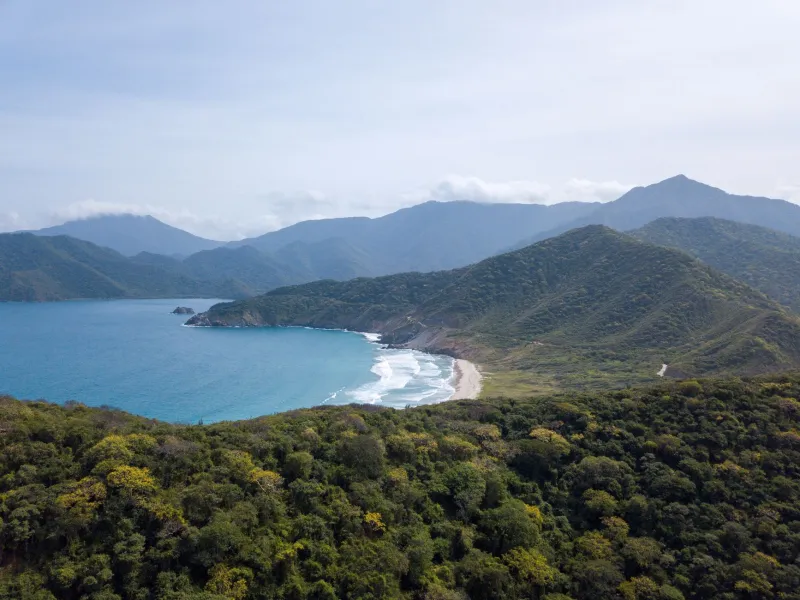
The Sierra Nevada de Santa Marta rises almost vertically from the Caribbean coast, creating a landscape so compressed and dramatic that building anything here is expensive, logistically nightmarish, and ecologically disruptive in ways that even the most aggressive developers tend to avoid. You're not dealing with a flat, sandy coastline that slots neatly into a resort blueprint. The terrain fights back.
Rivers cut through the park in ways that flood unpredictably. The jungle canopy is dense enough that clearing it triggers immediate erosion. Coastal access points are limited, which means large-scale tourism infrastructure would require road construction through some of the most biodiverse terrain in South America. That's not impossible — but it's expensive enough to have slowed the process considerably.
The park's beaches also face the open Caribbean without the natural reef protection that makes places like Cancún or Aruba so calm and predictable for resort developers. The sea at Tayrona can be genuinely rough. That's part of its appeal, but it's also a practical deterrent to the kind of water sports infrastructure that tends to follow resort development.
The Kogi Factor — and Why It Matters More Than People Realize
Tayrona's wildness isn't just ecological. It's political, in the most meaningful sense of that word.
The Sierra Nevada is home to four Indigenous groups — the Kogi, Arhuaco, Wiwa, and Kogui-Malayo-Arhuaco — who have maintained their presence in and around the park for centuries. The Kogi in particular have been vocal and internationally visible in their opposition to development that threatens the Sierra's ecosystems, which they regard as spiritually inseparable from the health of the wider world.
This isn't symbolic resistance. Indigenous territorial rights in Colombia carry legal weight, and any significant development in or around Tayrona has to navigate a complex consultation process with these communities. That process has slowed or stopped projects that might otherwise have moved quickly. It's one of the most underappreciated conservation mechanisms in the entire park.
Conservationists working in the region are careful to acknowledge this. As one researcher affiliated with a Santa Marta-based environmental organization put it: "The Kogi aren't a tourism attraction. They're a governing force. When people understand that, they understand why Tayrona doesn't look like Punta Cana."
What 'Protected' Actually Means Here
Tayrona was designated a national park in 1964, but protection on paper and protection in practice are two different things. Colombia's National Parks system (Parques Nacionales Naturales) has historically been underfunded, and enforcement of park boundaries has been inconsistent.
What's kept the park relatively intact isn't just law — it's a combination of factors that happen to be working in the same direction at the same time. The difficult terrain discourages casual encroachment. The Indigenous communities actively monitor and resist boundary violations. And international attention on Colombia's biodiversity has made Tayrona a place where the reputational cost of obvious overdevelopment is high.
But those factors can shift. Infrastructure investment in the broader Santa Marta region is accelerating. The road that runs along the coast toward the park's entrance has improved significantly over the past decade. More visitors means more economic pressure to accommodate them. And accommodation pressure, if history is any guide, tends to resolve in favor of more accommodation.
The Ecosystem at Stake
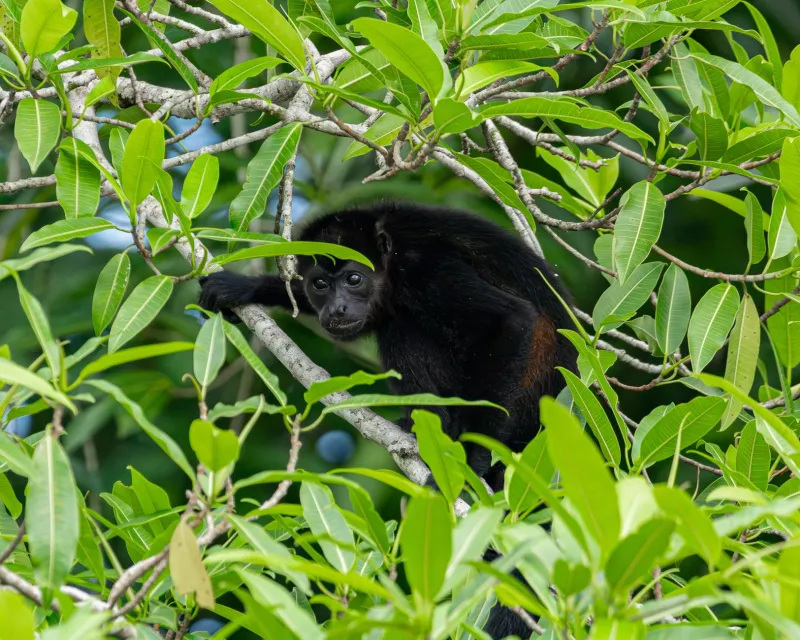
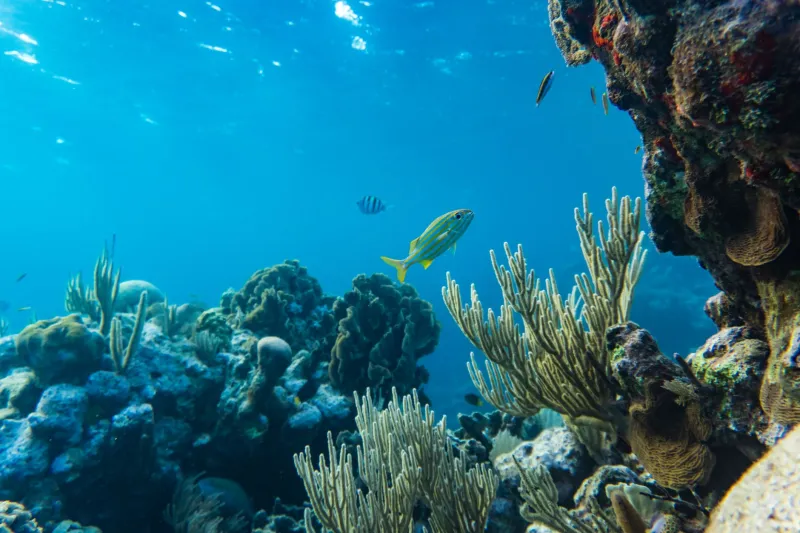
What would actually be lost if Tayrona tipped toward resort-scale development isn't abstract. The park contains one of the few remaining dry tropical forests in Colombia, cloud forest at higher elevations, mangrove systems along the coast, and coral reefs offshore — all within a remarkably small geographic footprint. The density of ecosystems in transition with each other creates biodiversity that researchers are still cataloging.
Howkeye-and-toucan sightings that travelers post casually on Instagram represent species that exist in this region precisely because the habitat hasn't been fragmented. Coral reef systems off the coast are already under thermal stress from warming ocean temperatures — additional pressure from coastal construction and boat traffic could push them past recovery thresholds.
"The park is functioning as a refugium," explained one marine biologist who has studied the coastal reef systems near Tayrona for years. "It's a place where species are hanging on because of the protection. Remove the protection and you don't just lose a pretty view — you lose the populations that would otherwise seed recovery elsewhere."
Is the Wildness Sustainable — or Just Lucky?
Here's the honest answer: it's partly both.
Tayrona has benefited from a specific combination of circumstances — difficult geography, Indigenous governance, underdeveloped regional infrastructure, and a period of relative political instability in Colombia that kept international mass tourism lower than it otherwise might have been. Several of those circumstances are changing.
Colombia is safer and more accessible than it was fifteen years ago. That's genuinely good news for the country and its people. But it also means Tayrona is entering a new phase of visitor pressure without necessarily having the regulatory framework, the staffing levels, or the political will to manage it sustainably.
The park's daily visitor caps exist but are inconsistently enforced. The accommodation options inside the park are deliberately limited, but the area immediately outside the boundaries is developing faster. The experience of "wild" Tayrona that travelers are currently selling to each other on social media may already be a slightly softer version of what existed a decade ago.
That doesn't mean it's too late. Conservation organizations are active, Indigenous communities remain engaged, and Colombian environmental law — when enforced — is genuinely protective. But the window for experiencing Tayrona as a functioning wild ecosystem rather than a managed nature experience is real, and it's worth treating that way.
Go. Go soon. And when you're there, try to understand what you're actually looking at — not just a beautiful park, but a complicated, contested, quietly precarious place that has so far managed to remain itself.